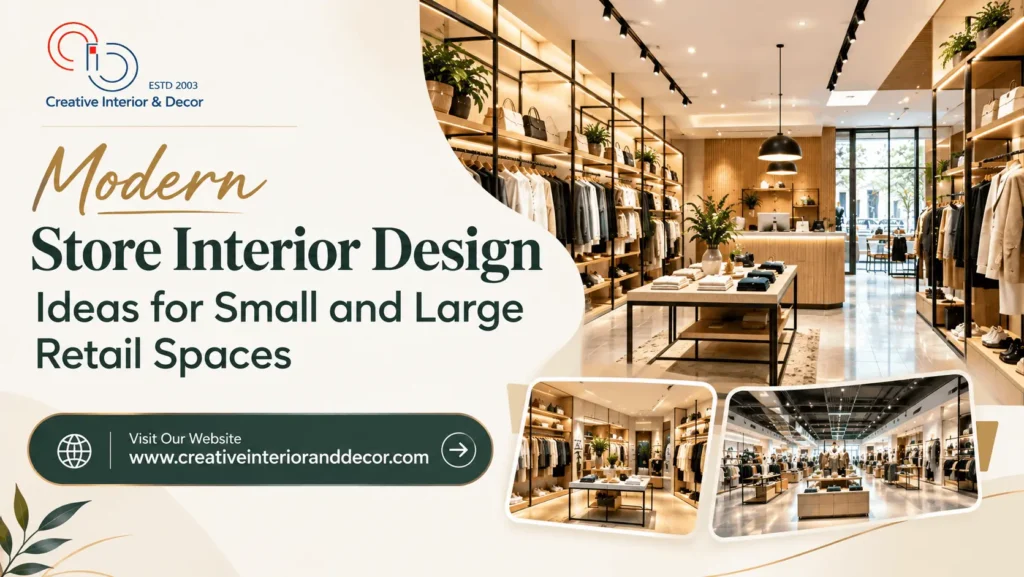
A well-designed retail space can do more than look attractive. It can make shopping easier, improve customer experience, and help your brand stand out. Whether you run a small boutique or a large retail outlet, the right store interior design can make a noticeable difference.
Modern retail design combines layout, lighting, colors, displays, furniture, and branding. If you are planning a new store or renovating an existing one, professional Commercial Interior Design Services can help you create a space that is both attractive and practical.
In this guide, we explore modern interior design ideas that work for both small and large retail spaces.
Why Store Interior Design Matters
Customers often form an impression of a store within seconds of entering it. A cluttered or poorly planned space can make shopping difficult, while a clean and well-organized store can create a more positive experience.
Good retail interior design can help you:
- Create a strong first impression
- Improve customer movement
- Make products easier to find
- Highlight important products
- Build a consistent brand identity
- Make better use of available space
The best design is not always the most expensive. Smart changes to the layout, lighting, and displays can improve how a store looks and functions.
Modern Store Interior Design Ideas for Small Retail Spaces
Small stores have one major challenge: limited space. Every square foot needs to be used carefully without making the shop feel crowded.
- Use an Open Layout
An open layout can make a small store feel larger. Avoid placing too many shelves or displays near the entrance.
Keep the main pathways clear and use walls for additional product displays. Customers should be able to move around without feeling restricted.
- Make Use of Vertical Space
When floor space is limited, look upward.
Tall shelves and wall-mounted displays can provide additional storage without using valuable floor space. Higher wall sections can also be used for:
- Brand messaging
- Product categories
- Decorative elements
- Promotional graphics
This allows you to maximize space while keeping the floor open.
- Choose Light Colors
Light colors can make a small retail space feel brighter and more spacious. White, beige, light grey, and other neutral shades are popular choices.
You can add your brand colors through signage, furniture, feature walls, and product displays.
- Use Mirrors Strategically
Mirrors can create a greater sense of depth and reflect light around a small store. They can also be useful in fashion and lifestyle shops.
Place mirrors where they improve the customer experience instead of using them only as decoration.
- Create a Focal Point
A small store does not need many decorative features. Instead, create one strong focal point.
It could be a feature wall, new product display, branded counter, or creative lighting installation. A focal point helps direct attention toward important products.
Modern Store Interior Design Ideas for Large Retail Spaces
Large stores offer more space, but that can create another problem. A large, empty area may feel confusing or uninviting.
The solution is to divide the store into clear zones.
- Create Dedicated Product Zones
Use different areas for different product categories. For example, a large retail store might have sections for:
- New arrivals
- Best sellers
- Premium products
- Everyday essentials
- Seasonal products
- Promotional items
Clear zoning helps customers understand the store and find what they need more easily.
- Plan the Customer Journey
Think about how customers move through the store.
The entrance should immediately communicate what your business offers. From there, customers should be guided naturally toward important sections.
Lighting, flooring, signage, shelving, and displays can all help create this journey.
- Add Statement Displays
Large stores can benefit from bigger visual features. Statement displays can make the shopping experience more memorable.
Consider:
- Feature walls
- Large product installations
- Digital screens
- Branded display structures
- Interactive product areas
These elements should support your brand rather than distract customers from the products.
Lighting Ideas for Modern Retail Interiors
Lighting is a key part of retail design. It affects both product visibility and the overall mood of the store.
Ambient Lighting
Ambient lighting provides general illumination. It should make the store comfortable without creating excessive glare.
Accent Lighting
Accent lighting draws attention to specific products or displays. It works well for premium products, new arrivals, and feature areas.
Decorative Lighting
Pendant lights and other modern fixtures can add personality to a store while supporting the overall design theme.
A combination of these lighting types can create a more balanced and attractive retail environment.
Choose Colors That Match Your Brand
Color can influence how customers feel inside a store. Neutral tones can create a clean and sophisticated atmosphere, while bold colors can create a more energetic feel.
When selecting colors, consider:
- Your target customers
- Your brand identity
- Product colors
- Store size
- Natural lighting
- Desired atmosphere
Avoid using too many colors. Instead, use your brand colors strategically to highlight important areas.
Create Better Product Displays
Product presentation is central to retail design. Even a beautiful store can struggle if products are difficult to see or access.
Some useful display techniques include:
- Place popular products at eye level
- Group related products together
- Highlight new arrivals
- Keep promotional displays simple
- Change displays regularly
- Leave enough space between products
A clean display helps customers understand your product range quickly.
Add Technology to Your Retail Interior
Modern stores can use technology to improve convenience and engagement.
Depending on your business, you can consider:
- Digital signage
- Interactive screens
- QR codes
- Self-service kiosks
- Digital product catalogs
- Smart mirrors
Technology should have a clear purpose. Too many screens or devices can make the space feel cluttered.
Make the Checkout Area Easy to Find
Customers should be able to locate the checkout without asking for help. At the same time, the counter should not block the entrance or create congestion.
Keep the checkout area clean and organized. You can also use this space for small, relevant products that customers may purchase at the last moment.
Sustainable Interior Design Ideas
Sustainable design is becoming increasingly important for modern retail spaces.
Businesses can consider:
- Energy-efficient lighting
- Recycled or reclaimed materials
- Durable furniture
- Locally sourced materials
- Reusable display systems
- Low-waste construction methods
Durable materials can also reduce the need for frequent replacements and maintenance.
Small vs. Large Retail Spaces
The design strategy should depend on the size of your store.
For small spaces, focus on:
- Open layouts
- Vertical storage
- Light colors
- Multi-purpose furniture
- Minimal clutter
- Smart displays
For large spaces, focus on:
- Clear zoning
- Customer navigation
- Feature displays
- Comfortable pathways
- Strong focal points
- Consistent branding
In both cases, the goal is to create a space that is easy to navigate, visually appealing, and comfortable.
Common Shop Interior Design Mistakes to Avoid
Even good design ideas can fail when they are poorly planned. Avoid these common mistakes:
Overcrowding the Store
More products do not always mean more sales. Too many displays can make customers uncomfortable and make products harder to notice.
Poor Lighting
Dark corners and excessive glare can reduce product visibility and affect the shopping experience.
Ignoring Customer Flow
A beautiful interior is not useful if customers cannot move through the store naturally.
Inconsistent Branding
Colors, signage, furniture, and displays should work together. A disconnected visual style can weaken your brand identity.
Ignoring Your Target Customer
Your store should reflect the people you want to attract. Consider their expectations, habits, and preferences before making major design decisions.
How Professional Interior Design Can Help
Planning a retail interior involves many decisions, including space planning, materials, furniture, lighting, displays, and branding.
Professional Shop Interior design services can help businesses create a retail environment that balances appearance, functionality, and customer experience.
Whether you are opening a new store or renovating an existing one, an experienced design team can help you use your available space more effectively.
FAQs About Store Interior Design
- What is modern store interior design?
Modern store interior design combines clean layouts, functional displays, contemporary materials, effective lighting, and strong branding to create an attractive retail environment.
- How can I make a small store look bigger?
Use light colors, clear pathways, vertical displays, mirrors, and minimal furniture. Avoid overcrowding the floor.
- What is important in shop interior design?
Layout, lighting, product displays, customer flow, branding, and comfort should work together to create a positive shopping experience.
- How often should a retail store update its interior?
There is no fixed schedule. However, stores should review their layout and displays regularly and update the design when it no longer reflects the brand or customer expectations.
- Can interior design help improve retail sales?
A well-planned interior can improve product visibility, customer movement, comfort, and engagement, which can support better purchasing decisions.
- Should small and large stores use the same design approach?
No. Small stores should focus on maximizing space and reducing clutter, while large stores often need stronger zoning and navigation.
Conclusion
Modern retail design is about creating a space that works as well as it looks. Whether you have a compact boutique or a large retail outlet, thoughtful planning can improve the way customers experience your business.
Small stores should focus on smart space use, open layouts, vertical displays, and light colors. Large stores should focus on zoning, customer flow, feature displays, and clear navigation.
Most importantly, your interior should reflect your brand and make shopping easy and enjoyable. With the right Store interior design, your retail space can become more than a place to display products. It can become an important part of your brand experience.