
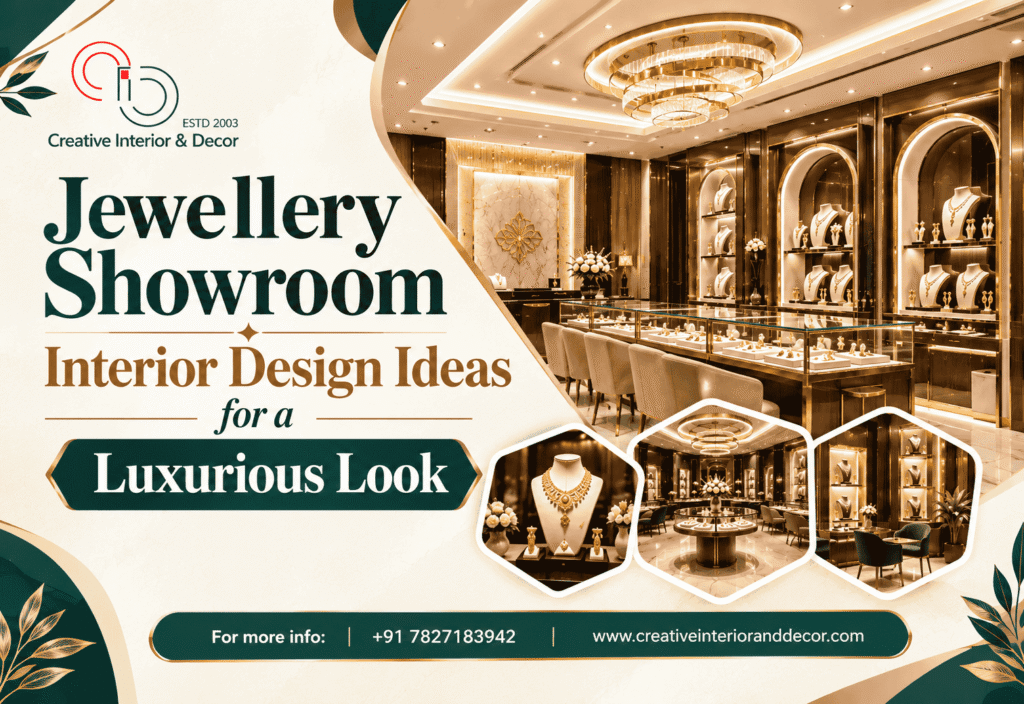
A jewellery showroom is more than just a retail space. It is the place where customers experience a brand, explore valuable products, and make important purchasing decisions. Because jewellery is associated with elegance, beauty, and luxury, the showroom interior should create the same feeling from the moment a customer walks through the entrance.
A well-planned jewellery showroom interior designing can enhance product visibility, improve customer experience, strengthen brand identity, and create a premium atmosphere. From elegant lighting and sophisticated display counters to carefully selected colours and materials, every element contributes to the overall impression of the showroom.
Whether you are opening a new jewellery store or renovating an existing one, the following ideas can help you create an attractive and luxurious showroom.
Why Jewellery Showroom Interior Design Matters
Jewellery needs to be displayed in a way that highlights its details, shine, colour, and craftsmanship. A poorly designed showroom can make even beautiful jewellery appear less attractive, while a thoughtfully designed space can make the products feel more exclusive.
A good showroom design should focus on:
- Attractive and organized jewellery displays
- Comfortable customer movement
- Appropriate lighting
- Premium materials and finishes
- Strong brand identity
- Secure product presentation
- Comfortable seating and consultation areas
- A welcoming and sophisticated atmosphere
The goal is not simply to make the showroom look expensive. It is to create an environment where the design complements the jewellery and makes customers feel comfortable while they explore different collections.
1. Create an Elegant Entrance
The entrance creates the first impression of your jewellery showroom. It should immediately communicate the quality and personality of your brand.
Consider using materials such as glass, marble, wood, metal accents, or textured wall panels to create an elegant entrance. A simple brand logo with subtle lighting can also make the entrance more recognizable.
Avoid overcrowding the entrance with too many decorative elements. A clean and sophisticated design often creates a stronger luxury impression.
2. Choose a Sophisticated Colour Palette
Colours have a major influence on the appearance of a jewellery showroom. Neutral and sophisticated shades can create a refined background that allows jewellery to remain the main attraction.
Popular combinations include:
- White and gold
- Cream and beige
- Charcoal and metallic gold
- Deep brown and warm lighting
- Soft grey and champagne
- Black and gold for a dramatic luxury look
The right combination depends on the jewellery brand and target customers. For example, a traditional jewellery store may use warm colours and wood finishes, while a contemporary brand may prefer neutral shades with metallic accents.
3. Invest in High-Quality Display Counters
Display counters are among the most important elements of jewellery showroom design. Customers should be able to view products comfortably without feeling that the space is crowded.
Counters should provide:
- Clear product visibility
- Comfortable viewing height
- Integrated lighting
- Secure glass displays
- Adequate space between product collections
- Easy access for showroom staff
Use premium finishes such as marble, engineered stone, wood veneer, glass, or metal detailing to create a sophisticated appearance.
The design should also allow staff to interact comfortably with customers while presenting different jewellery pieces.
4. Use Lighting to Highlight Jewellery
Lighting can completely transform a jewellery showroom. Since jewellery depends heavily on sparkle and reflection, the lighting system needs to be carefully planned.
Use a combination of ambient, accent, and display lighting.
:- Ambient Lighting
Ambient lighting provides overall illumination throughout the showroom. It should be bright enough for customers to move comfortably without creating harsh shadows.
:- Accent Lighting
Accent lights can draw attention to specific display areas, collections, or architectural features.
:- Display Lighting
Display lighting should illuminate individual jewellery pieces without creating excessive glare or reflections on the glass.
Warm or neutral lighting can create a luxurious atmosphere, but the exact colour temperature should be selected according to the jewellery and materials being displayed.
5. Design a Comfortable Customer Seating Area
Buying jewellery can take time, particularly when customers are selecting wedding jewellery or making a high-value purchase. A comfortable seating area can make the shopping experience more relaxed.
Consider adding:
- Premium upholstered chairs
- Small sofas
- Elegant side tables
- Soft lighting
- Mirrors
- Product consultation counters
The seating area should feel connected to the main showroom without blocking customer movement.
For luxury jewellery stores, a private consultation area can also provide customers with a more personalized experience.
6. Add Luxury Materials and Finishes
Materials play an important role in creating a premium showroom atmosphere. However, using expensive materials everywhere is not always necessary.
Instead, focus on strategic use of high-quality finishes.
For example:
- Marble or stone for flooring
- Fluted or textured wall panels
- Metallic trims
- Premium wood finishes
- Decorative glass
- Brass or champagne-gold accents
- High-quality fabrics
Combining two or three complementary materials can create a more sophisticated appearance than using too many finishes together.
7. Create Attractive Jewellery Display Walls
Display walls can help organize collections while adding visual interest to the showroom.
A feature wall can be designed specifically for:
- Bridal jewellery
- Gold collections
- Diamond jewellery
- New arrivals
- Designer collections
- Seasonal offers
Backlit niches, glass shelves, decorative panels, and illuminated branding can be used to make these displays more attractive.
The key is to maintain visual balance. Every product does not need to compete for attention.
8. Use Mirrors Strategically
Mirrors are particularly useful in jewellery showrooms because customers often want to see how a necklace, earring, or other accessory looks when worn.
Large decorative mirrors can also make a showroom feel more spacious.
Instead of placing mirrors randomly, position them near seating and product consultation areas. Use elegant frames or integrated lighting to make them part of the overall interior design.
9. Plan the Showroom Layout Carefully
A luxurious showroom should also be easy to navigate. Customers should be able to move naturally between different collections without feeling restricted.
A well-planned layout can include:
Entrance → Featured Display → Main Collections → Consultation Area → Seating → Billing Counter
The actual arrangement will depend on the showroom size, shape, product range, and customer flow.
Avoid placing too many counters close together. Giving each display enough breathing space can make the showroom feel larger and more premium.
10. Design a Premium Billing Counter
The billing area is often one of the final points of interaction between the customer and the brand. It should therefore maintain the same design quality as the rest of the showroom.
A sophisticated billing counter can include:
- Marble or stone finishes
- Wooden detailing
- Backlit branding
- Decorative wall panels
- Hidden storage
- Integrated technology
Keep the counter organized and avoid unnecessary equipment or clutter being visible to customers.
11. Incorporate Your Brand Identity
Interior design should communicate the personality of the jewellery brand.
For example, a traditional jewellery brand might use:
- Rich wooden finishes
- Gold accents
- Decorative patterns
- Warm lighting
A modern jewellery brand might use:
- Minimalist furniture
- Neutral colours
- Clean lines
- Glass and metal
- Contemporary lighting
Your logo, colours, typography, display style, and architectural details should work together to create a consistent brand experience.
12. Don’t Ignore Security
Luxury design should never come at the expense of security. Jewellery showrooms need carefully planned security solutions that blend naturally into the interior.
Security cameras, controlled access points, secure display cases, alarms, and appropriate storage areas should be incorporated into the design from the beginning.
Working with an experienced commercial interior designer can help ensure that security, customer movement, display requirements, and aesthetics are considered together rather than treated as separate elements.
13. Add Subtle Decorative Elements
Decorative elements can enhance the luxury atmosphere when used carefully.
Consider adding:
- Indoor plants
- Sculptural décor
- Artistic wall panels
- Decorative lighting fixtures
- Branded artwork
- Textured walls
- Elegant ceiling details
However, avoid excessive decoration. Jewellery should always remain the focal point.
14. Create a Statement Ceiling
The ceiling is often overlooked during showroom planning, but it can significantly influence the overall appearance of the space.
A false ceiling with concealed lighting, geometric details, recessed fixtures, or metallic accents can create a sophisticated look.
For smaller showrooms, simple ceiling designs with strategically positioned lighting can make the space feel more open without visually lowering the ceiling.
15. Focus on the Customer Experience
Luxury is not only about expensive materials. It is also about how customers feel inside the showroom.
Think about the complete customer journey:
- Is the entrance welcoming?
- Can customers easily find different collections?
- Are the displays comfortable to view?
- Is there enough seating?
- Can customers discuss purchases privately?
- Is the lighting comfortable?
- Does the showroom feel organized?
A successful jewellery showroom combines aesthetics with functionality.
Frequently Asked Questions
What is important in jewellery showroom interior design?
Lighting, display counters, layout, colour scheme, security, branding, materials, and customer comfort are some of the most important factors. The design should make jewellery stand out while providing a comfortable shopping experience.
Which colours are best for a luxury jewellery showroom?
White, cream, beige, black, deep brown, grey, and metallic shades such as gold or champagne are commonly suitable for luxury showroom interiors. The final choice should match the brand identity and jewellery collection.
What type of lighting is best for jewellery showrooms?
A combination of ambient, accent, and display lighting generally works well. Display lighting should provide enough brightness to highlight jewellery while minimizing glare and unwanted reflections.
How can I make a small jewellery showroom look luxurious?
Use a simple colour palette, large mirrors, glass displays, efficient storage, integrated lighting, and uncluttered counters. Using fewer but higher-quality finishes can also create a more premium appearance.
How much does jewellery showroom interior design cost?
The cost depends on showroom size, location, materials, furniture, lighting, security requirements, customization, and overall design specifications. A professional designer can provide a more accurate estimate after understanding the project requirements.
Should I hire a professional interior designer for a jewellery showroom?
Yes, professional planning can help coordinate the layout, lighting, displays, branding, security, materials, and customer experience. An experienced commercial interior design professional can also help create a design that balances aesthetics with practical requirements.
Conclusion
A luxurious jewellery showroom should be elegant, functional, secure, and comfortable at the same time. The right combination of lighting, colours, display counters, premium finishes, mirrors, seating, branding, and space planning can transform an ordinary retail space into an impressive customer experience.
The most effective jewellery showroom interior design does not simply make the store look expensive. It creates an environment where the jewellery gets the attention it deserves while customers feel comfortable, confident, and valued.
Whether you are planning a new showroom or renovating an existing store, focus on the complete experience rather than individual design elements. With thoughtful planning and professional execution, your showroom can reflect the quality of your jewellery brand and create a memorable impression on customers.