
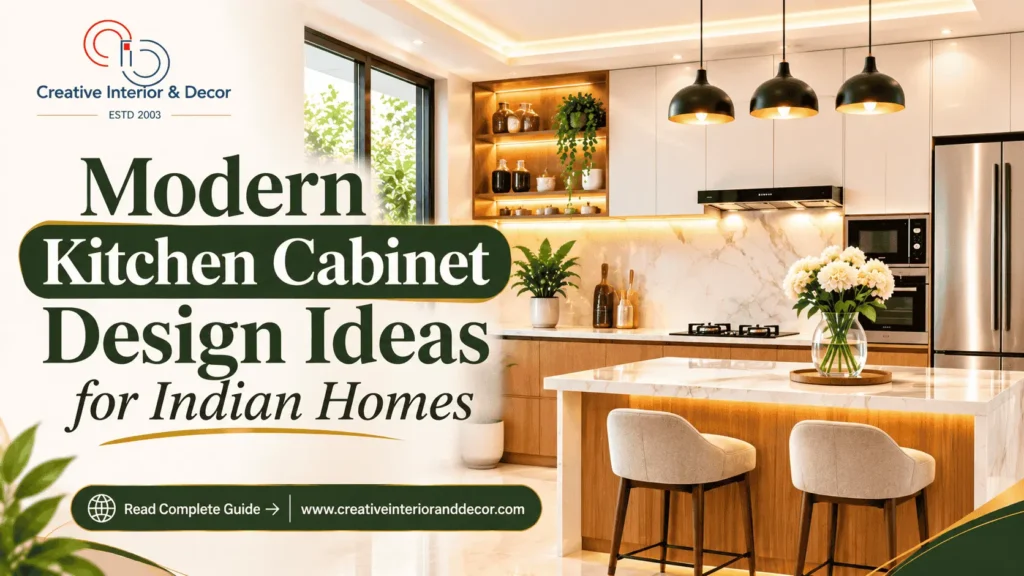
The kitchen is one of the most important spaces in an Indian home. It is where families prepare meals, share conversations, and spend time together. A well-designed kitchen should look beautiful, offer enough storage, and make daily cooking easier.
Kitchen cabinets play a major role in achieving this balance. They help organise utensils, groceries, appliances, and cooking essentials. The right cabinet design can also improve the overall look of your kitchen.
Today, Indian homeowners have many options, from sleek modular cabinets to traditional wooden finishes and modern handleless designs. Whether you have a small apartment kitchen or a large open kitchen, choosing the right cabinets can make a big difference.
In this guide, we will explore modern kitchen cabinet design ideas for Indian homes, along with useful tips on materials, colours, storage, and layout.
1. Handleless Kitchen Cabinets for a Clean Look
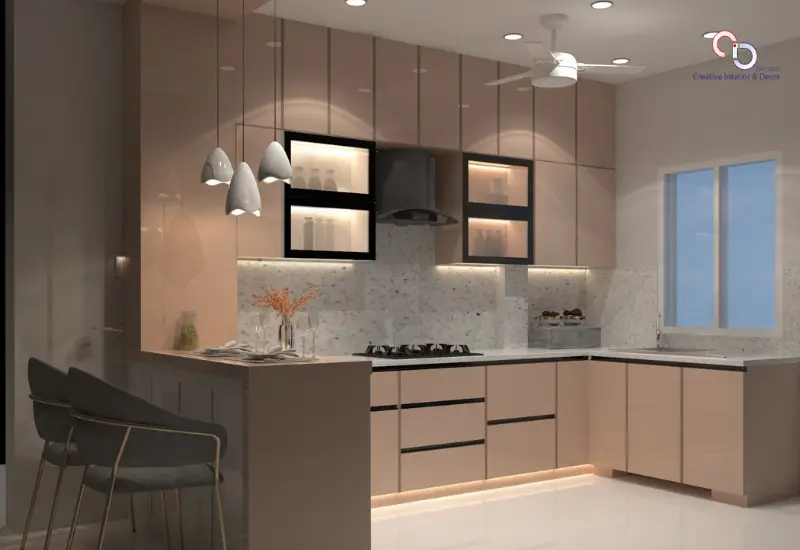
Handleless cabinets are a popular choice for modern kitchens. They offer a smooth and simple appearance without visible handles. This design works well in homes where homeowners prefer a neat and clutter-free space.
These cabinets use push-to-open systems or built-in grooves to open and close the doors.
Why choose handleless cabinets?
- They create a clean and seamless appearance.
- They work well in modern and minimalist kitchens.
- They reduce visual clutter.
- They are available in many colours and finishes.
- They make cabinet surfaces look more uniform.
You can choose glossy white, matte grey, or natural wood finishes for a stylish look. For better results, use quality fittings that allow doors and drawers to open smoothly.
2. Modular Kitchen Cabinets for Better Storage
Modular kitchen cabinets are designed in separate units that fit together to create a complete kitchen layout. They are practical, stylish, and suitable for many Indian homes.
You can customise these units based on your kitchen size, storage needs, and cooking habits.
Popular modular cabinet options
- Base cabinets: These sit below the countertop and store heavy utensils, pots, and pans.
- Wall cabinets: These provide extra storage without using floor space.
- Tall cabinets: These are useful for storing groceries, cleaning supplies, and appliances.
- Drawer cabinets: These help organise cutlery, containers, and everyday cooking tools.
- Corner cabinets: These make better use of difficult corner spaces.
Modular cabinets are available in different layouts, including L-shaped, U-shaped, parallel, and straight kitchens.
Before selecting a design, think about how you use your kitchen. Keep frequently used items within easy reach and store less-used items in higher cabinets. You can also explore different kitchen interior design ideas to find a layout that suits your cooking habits and available space.
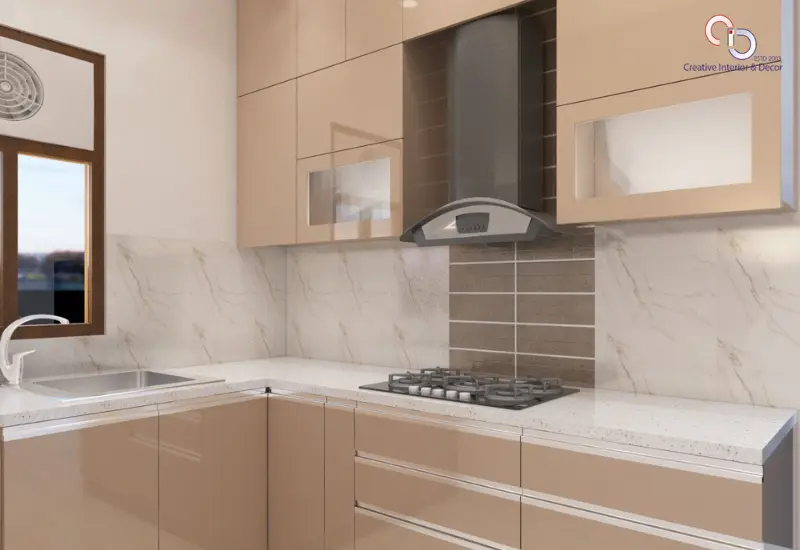
3. Wooden Kitchen Cabinets for a Warm and Natural Feel
Wooden cabinets remain a timeless choice for Indian kitchens. They add warmth and can complement both traditional and modern interiors.
You can choose natural wood, engineered wood with a wood finish, or laminate surfaces that look like real timber.
Popular wooden cabinet styles
Natural oak finish: Creates a light and warm appearance.
Walnut finish: Adds a rich and elegant touch.
Teak-inspired finish: Works well with traditional Indian design elements.
Light ash wood: Gives the kitchen a fresh and modern look.
Wood finishes pair well with white countertops, neutral walls, and simple hardware. You can also combine wooden lower cabinets with light-coloured upper cabinets for a balanced appearance.
However, kitchen cabinets must handle heat, moisture, and regular cleaning. Choose suitable materials and finishes that are designed for kitchen use.
4. Two-Tone Kitchen Cabinets for a Stylish Interior
Two-tone kitchen cabinets use two different colours or finishes in the same kitchen. This design adds contrast and makes the space more interesting.
For example, you can choose dark green lower cabinets and white upper cabinets. Another option is to combine walnut-finish cabinets with beige or cream units.
Popular two-tone combinations
- White and natural wood
- Navy blue and white
- Grey and light oak
- Sage green and cream
- Black and warm beige
- Charcoal and walnut
A simple way to use this style is to keep the upper cabinets lighter and the lower cabinets darker. This can make the kitchen feel more open while adding depth.
Choose colours that match your flooring, countertops, backsplash, and wall paint. A balanced combination will help the kitchen look elegant rather than busy.
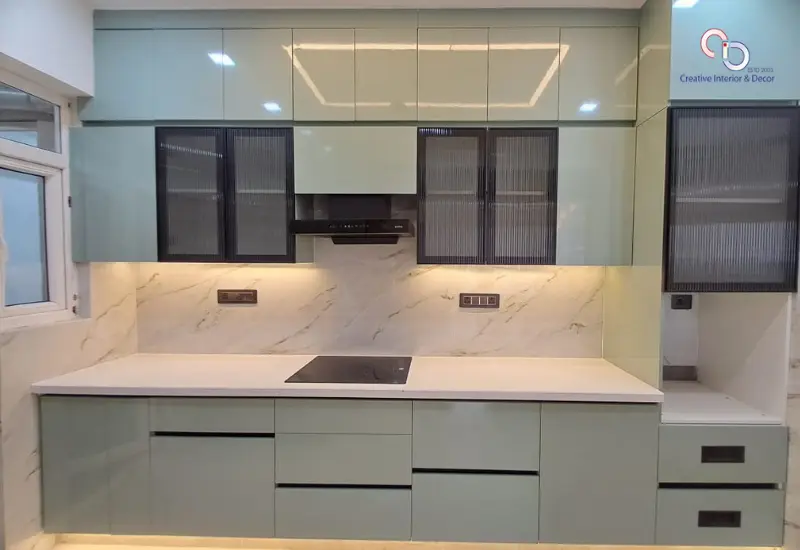
5. Glass-Front Kitchen Cabinets for an Elegant Look
Glass-front cabinets are a great option if you want to display attractive kitchen items. They add a decorative touch and can make the kitchen feel more open.
You can use clear glass, frosted glass, or tinted glass depending on your preferred style.
Benefits of glass-front cabinets
- They create a lighter visual appearance.
- They help display beautiful crockery and glassware.
- They add elegance to modern kitchens.
- They can be paired with internal cabinet lighting.
Frosted or tinted glass is useful when you want a more subtle look. Clear glass works well for displaying neatly arranged items.
Avoid using glass doors for every cabinet. A combination of solid and glass-front units often creates a better balance.
6. Floor-to-Ceiling Cabinets for Maximum Storage
If you have limited kitchen space, floor-to-ceiling cabinets can help you make better use of the available height.
These cabinets provide extra storage for groceries, large utensils, appliances, and items that you do not use every day.
Smart ways to use tall cabinets
- Create a dedicated pantry section.
- Add shelves for dry food storage.
- Include a built-in space for kitchen appliances.
- Use pull-out baskets for better access.
- Store seasonal or rarely used items on higher shelves.
In Indian kitchens, extra storage is especially useful for organising pressure cookers, large cooking pots, containers, and grocery supplies.
Make sure frequently used items are stored at a comfortable height. A well-planned tall cabinet should improve storage without making daily tasks difficult.
7. Choose the Right Kitchen Cabinet Colours
The colour of your kitchen cabinets can change the entire appearance of the space. Your choice should depend on kitchen size, natural light, wall colour, and personal taste.
Trending cabinet colour ideas
White: A timeless choice that makes kitchens look bright and spacious.
Grey: A modern neutral shade that pairs well with wood and stone.
Navy blue: Adds depth and creates a bold focal point.
Sage green: Offers a soft, natural, and calming appearance.
Black: Creates a dramatic look when balanced with lighter surfaces.
Beige: Gives the kitchen a warm and elegant feel.
For smaller kitchens, lighter shades are often a practical choice because they reflect light and make the space feel open. In larger kitchens, darker shades can add character and depth.
You can also combine two colours to create a unique look without using too many decorative elements.
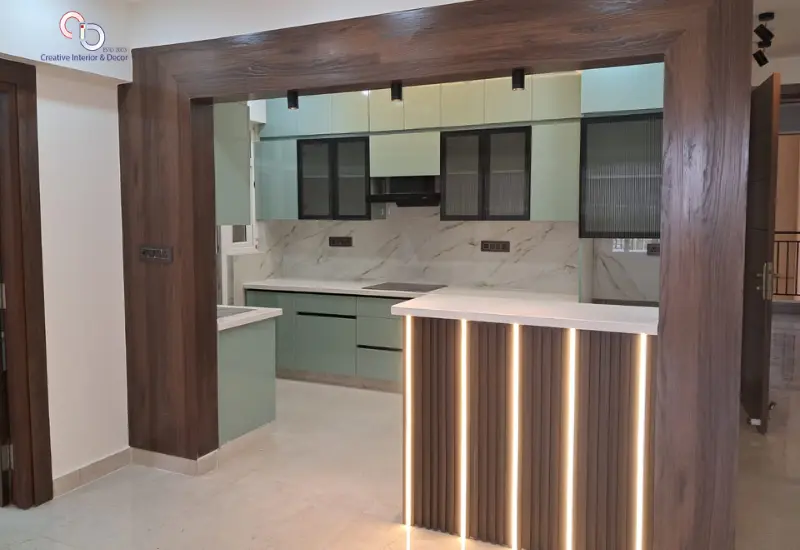
8. Smart Storage Solutions for Indian Kitchens
A beautiful kitchen should also be easy to use. Indian cooking often involves many utensils, spices, containers, and appliances. Smart storage helps keep everything organised.
Useful kitchen cabinet storage ideas
- Pull-out spice racks: Keep spice jars organised and easy to access.
- Corner carousel units: Make corner cabinets more useful.
- Deep drawers: Store large pots, pans, and pressure cookers.
- Cutlery organisers: Keep spoons, knives, and other tools in order.
- Pull-out pantry units: Make groceries easier to organise.
- Under-sink storage: Use this space for cleaning supplies.
- Vertical tray storage: Keep chopping boards and baking trays organised.
Soft-close hinges and drawer channels can also improve daily convenience. They reduce noise and allow cabinets to close smoothly.
Think about your cooking routine before selecting storage accessories. The best kitchen design is one that supports your everyday needs.
9. Select Durable Materials for Kitchen Cabinets
Cabinet material is just as important as its design. Indian kitchens often experience heat, steam, oil splashes, and frequent cleaning. Choosing suitable materials can improve durability and reduce maintenance.
Common kitchen cabinet materials
- Plywood: A popular option for kitchen cabinets when suitable moisture-resistant grades are selected.
- MDF: Offers a smooth surface for painted and decorative finishes.
- Particle board: Often used in budget-friendly modular furniture, but needs proper protection from moisture.
- Laminate: Available in many colours and textures and is easy to maintain.
- Acrylic: Offers a smooth, glossy appearance.
- Membrane finish: Provides a seamless decorative surface for cabinet doors.
Each material has different benefits, costs, and maintenance needs. Ask your interior designer or supplier about the core material, edge protection, hardware quality, and warranty before making a decision.
When planning a complete home renovation, professional Home interior designing services can help you select suitable materials and create a consistent design across your kitchen and other rooms.
10. Match Kitchen Cabinets With Your Overall Home Interior
Your kitchen should feel connected to the rest of your home. A consistent design approach can make the entire interior look more organised and attractive.
For example, you can repeat wood finishes, neutral colours, or metal accents from your living area in the kitchen.
If you have an open kitchen, coordinate the cabinet colours with the nearby living and dining areas. This creates a smooth visual connection between different spaces.
Good interior planning is also important in commercial environments. Just as residential kitchens need practical layouts, offices need organised and comfortable spaces. Professional office interior designing can help businesses create functional work environments with a well-planned appearance.
11. Common Kitchen Cabinet Design Mistakes to Avoid
Even a stylish kitchen can become difficult to use if the cabinets are not planned properly.
Here are some common mistakes to avoid:
- Choosing cabinet sizes without measuring the kitchen.
- Ignoring ventilation and appliance requirements.
- Using materials that cannot handle kitchen moisture.
- Installing too many dark cabinets in a poorly lit space.
- Forgetting corner storage solutions.
- Selecting low-quality hinges and drawer channels.
- Keeping frequently used items in hard-to-reach places.
Plan your kitchen layout before finalising cabinet designs. Also, make sure there is enough space for opening drawers, cabinet doors, and appliances.
Frequently Asked Questions (FAQs)
- Which kitchen cabinet design is best for Indian homes?
Modular kitchen cabinets are a practical choice for many Indian homes. They offer flexible layouts, organised storage, and a wide range of finishes. The best design depends on your kitchen size, budget, and cooking needs.
- Which material is best for kitchen cabinets?
Moisture-resistant plywood with a suitable laminate finish is a popular option. However, MDF, acrylic, and other materials can also work depending on the location, budget, and quality of installation.
- What is the best colour for modern kitchen cabinets?
White, beige, grey, navy blue, and sage green are popular choices. Light colours work well in small kitchens, while darker shades can add depth to larger spaces.
- How can I make a small kitchen look bigger?
Use light-coloured cabinets, handleless designs, good lighting, and vertical storage. Avoid oversized units and unnecessary decorative elements. Glass-front cabinets can also create a more open appearance.
- Are modular kitchen cabinets suitable for Indian cooking?
Yes. Modular cabinets can be planned for Indian cooking needs with deep drawers, spice racks, pantry units, and storage for large utensils. Choose durable materials and suitable hardware.
- How do I maintain kitchen cabinets?
Clean cabinet surfaces regularly with a soft cloth and a suitable cleaning solution. Wipe spills quickly, avoid excess water, and check hinges and drawer channels from time to time. Follow the care instructions for your cabinet finish.
Conclusion
Modern kitchen cabinet design is about combining style, storage, and everyday convenience. The right cabinets can make your kitchen look elegant while helping you organise utensils, groceries, appliances, and cooking essentials.
From handleless cabinets and wooden finishes to two-tone colours and smart storage systems, there are many ways to design a kitchen that suits your home. Focus on durable materials, practical layouts, and colours that match your overall interior style.
Before finalising your design, consider your cooking habits, available space, and storage needs. A well-planned kitchen will not only improve the appearance of your home but also make everyday cooking more comfortable and enjoyable.