
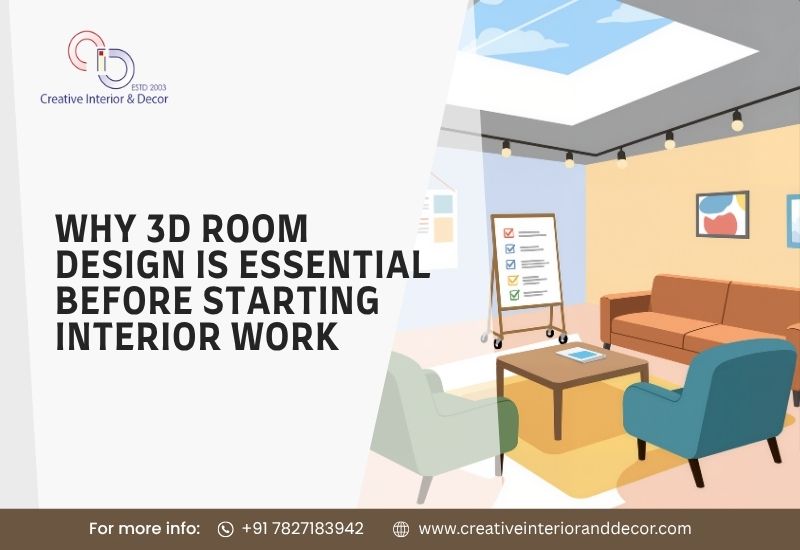
Starting an interior project without a clear visual plan often leads to uncertainty, last-minute changes, and costly surprises, something every experienced residential interior designer aims to prevent. A space may look beautiful in your mind, but once furniture is ordered, walls are painted, and lighting is installed, even small planning mistakes can become expensive to fix. That is exactly why 3D Room Design has become such an important first step in modern interior planning.
For homeowners, first-time buyers, and renovation clients, interior work is not just about choosing attractive finishes. It is about making sure every element works together in real life. A room should look good, feel comfortable, and function properly. With 3D Room Design, you can see the layout before execution begins, understand how the space will feel, and make smarter decisions with far less guesswork.
What Is 3D Room Design?
In simple terms, 3D Room Design is a realistic digital representation of a room created before the actual interior work begins. It shows the room in three dimensions, so you can view the space almost as if it already exists.
Unlike a traditional 2D floor plan, which is mostly flat and technical, a 3D view helps you understand:
- how large the room will feel
- where furniture will fit
- how colors and materials will look together
- whether the layout supports daily use
- how lighting and décor affect the final atmosphere
A 2D drawing is useful for measurements and technical planning. Verbal explanations are helpful for discussion. But neither fully captures the final experience of the room. 3D Room Design bridges that gap by turning ideas into a visual model that is easier to understand and evaluate.
Why 3D Room Design Matters Before Execution Begins
Interior work involves many moving parts. Furniture, lighting, storage, finishes, circulation space, and decorative elements all need to be coordinated. If planning starts only on paper or through rough discussion, there is a greater chance of mismatched choices and poor space usage.
3D Room Design matters because it allows decisions to be made early, when changes are still easy and affordable. Before construction, painting, carpentry, or furnishing begins, the design can be reviewed from multiple angles. This helps prevent regret later.
When homeowners see the room visually in advance, they gain confidence. They are no longer guessing whether a sofa will overwhelm the space or whether a wardrobe will block movement. They can assess the plan clearly and approve it with better understanding.
Key Benefits of 3D Room Design
- Better Visualization of Space, Layout, and Proportions
One of the biggest advantages of 3D Room Design is the ability to truly understand scale. Rooms often look larger or smaller than expected when viewed only in drawings or discussions. A 3D model shows how each element fits into the room in a realistic way.
This helps answer questions such as:
- Will the bed leave enough walking space?
- Is the dining table too large for the room?
- Will the wardrobe look bulky near the window?
- Does the living room feel open or crowded?
When proportions are visible, design becomes more practical. This reduces the risk of choosing furniture or layouts that look appealing individually but do not work together in the actual room.
- Ability to Experiment with Colors, Materials, and Furniture
Interior design is full of choices, and many of them are difficult to judge from a small sample or verbal suggestion. A paint swatch may look different on a wall. A wood finish may appear warmer or darker under certain lighting. Fabric textures may change the mood of the room.
With 3D Room Design, homeowners can compare different options before making permanent decisions. They can explore:
- wall colors
- flooring finishes
- cabinet textures
- upholstery styles
- curtain fabrics
- decorative accents
This makes the design process more flexible and less stressful. Instead of relying on imagination alone, clients can see how the space may look with different combinations. That makes it easier to choose a style that feels balanced and personal.
- Reduction in Costly Mistakes and Rework
One of the most practical reasons to use 3D Room Design is cost control. Interior mistakes are rarely small. A wrong-sized cabinet, poor lighting placement, or awkward furniture arrangement can lead to repairs, replacements, or rework.
Common expensive mistakes include:
- ordering furniture that does not fit
- building storage units that reduce movement space
- choosing finishes that clash in the finished room
- placing lighting in the wrong position
- designing poor circulation paths
3D planning helps identify these issues early. When problems are caught before work begins, the project can be adjusted without wasting materials, labor, or time. In many cases, the cost of preventing a mistake is far lower than fixing one later.
- Improved Communication Between Client and Designer
Interior projects often become confusing when ideas are discussed only in words. One person may imagine a “modern warm look,” while another interprets it as something completely different. This gap in understanding can lead to disappointment after execution.
3D Room Design improves communication by creating a shared visual reference. Both the client and designer can look at the same design and discuss details more clearly. This makes it easier to:
- explain preferences
- compare options
- request revisions
- approve final decisions with confidence
A visual plan removes ambiguity. It helps everyone stay on the same page and reduces the chances of misinterpretation during execution.
- Accurate Space Planning and Functionality
A beautiful room is important, but a room must also function well. Daily comfort depends on practical details such as walking space, storage access, natural light, and furniture placement. This is where 3D Room Design becomes especially useful.
It helps designers plan for:
- smooth movement around the room
- comfortable seating and usage zones
- efficient storage placement
- proper spacing between furniture pieces
- functional positioning of lighting and décor
For example, a bedroom may look visually appealing with a large bed and side tables, but if the room becomes too tight to move around in, the design fails in daily use. 3D planning ensures the room works as well as it looks.
How 3D Room Design Helps in Real Decision-Making
Many interior decisions feel small at first, but they have a major impact on the final result. 3D Room Design helps homeowners evaluate those decisions in context instead of separately.
Furniture Placement
Furniture placement is one of the most common challenges in any interior project. A sofa may fit physically, but will it interrupt movement? Will it block the window? Will the room feel balanced?
A 3D layout allows you to test different arrangements and choose the one that feels most practical and visually pleasing.
Lighting
Lighting changes the entire mood of a room. A ceiling light, pendant lamp, wall sconce, or floor lamp can create very different effects. In a 3D design, lighting can be placed strategically to show how the room will feel during different times of the day.
This helps avoid spaces that are too dark, too harsh, or poorly illuminated in key zones.
Storage
Storage is often underestimated during planning. Many homeowners realize too late that they need more drawers, shelves, or closed cabinets. With 3D planning, storage can be built into the room in a way that supports everyday use without crowding the space.
Décor
Décor should complete a room, not overwhelm it. Artwork, rugs, mirrors, plants, and accessories all need proper balance. 3D Room Design helps you see whether decorative choices enhance the room or make it feel busy.
Real-Life Scenarios Where 3D Room Design Prevents Common Errors
A family may want a stylish living room with a large sectional sofa. On paper, it seems ideal. But once the design is visualized in 3D, it becomes obvious that the sofa would block the walkway to the balcony. A smaller seating arrangement or a different layout solves the issue before anything is purchased.
In another case, a homeowner may want a full-height wardrobe in a compact bedroom. A 3D model may reveal that the wardrobe would make the room feel narrow and reduce access to the bed. With this insight, the design can shift to a more space-efficient storage solution.
In a kitchen, 3D Room Design can show whether cabinet doors open comfortably, whether appliances are placed logically, and whether there is enough counter space for daily tasks. These are the kinds of details that often look fine in theory but create problems in real life.
Common Misconceptions About 3D Room Design
“It Is Too Expensive”
Many people assume that 3D visualization adds unnecessary cost. In reality, it often helps save money by reducing design errors and avoiding rework. A clearer plan can prevent far more expensive problems later.
“It Is Only for Luxury Homes”
This is another common misunderstanding. 3D Room Design is useful for homes of all sizes and budgets. Whether you are updating a small apartment, renovating a family home, or designing a new house, the value of visual planning remains the same.
“I Can Imagine the Space Without It”
Some homeowners feel they do not need a 3D view because they can picture the final result. But interior spaces involve many details working together at once. It is often difficult to judge proportions, movement, and visual balance without seeing the design in a realistic format.
How Modern Technology Has Made 3D Room Design More Accessible
Today, 3D visualization tools are far more advanced and accessible than they were in the past. Interior designers can create realistic room views more quickly and with greater detail, making the process smoother for clients.
This has made 3D Room Design more practical for:
- apartments
- villas
- individual rooms
- renovation projects
- compact homes
- premium interiors
- budget-conscious spaces
The technology helps designers present ideas more clearly and helps homeowners make decisions with greater certainty. As a result, the planning stage becomes more transparent, efficient, and collaborative.
Practical Tips for Homeowners Using 3D Room Design
If you are planning an interior project, a few simple steps can help you get the most from 3D visualization:
- Share exact room measurements whenever possible.
- Be clear about how the room will be used daily.
- Mention your storage needs early in the process.
- Collect reference images for colors, furniture, and style.
- Ask for alternate layout options if you are unsure.
- Review the design carefully before approving execution.
- Think about comfort, not only appearance.
The more information you provide, the more useful the 3D Room Design becomes. It is not just about looking attractive; it is about creating a space that reflects your needs and lifestyle.
Why Professional Interior Design Services Often Include 3D Visualization
A well-planned interior project depends on both creativity and precision. That is why professional interior design services often include 3D Room Design as part of the process. It allows ideas to be refined before execution and helps ensure the final result aligns with the client’s expectations.
For homeowners, this creates a stronger sense of trust and clarity. Instead of relying on assumptions, they can review the design in advance and move forward with more confidence. This is especially valuable when the project involves custom furniture, major changes, or long-term investment in the home.
Conclusion
3D Room Design is not just a design tool, it is a smart planning strategy that should come before any interior work begins. It helps homeowners visualize their space, avoid costly mistakes, and make better decisions with clarity.
Whether you are designing a single room or an entire home, starting with 3D visualization ensures that your ideas are tested, refined, and ready for execution.
With the right planning approach, supported by thoughtful visualization from experts like Creative Interior & Decor, you can transform your space with confidence, knowing exactly what to expect before the work even begins.