
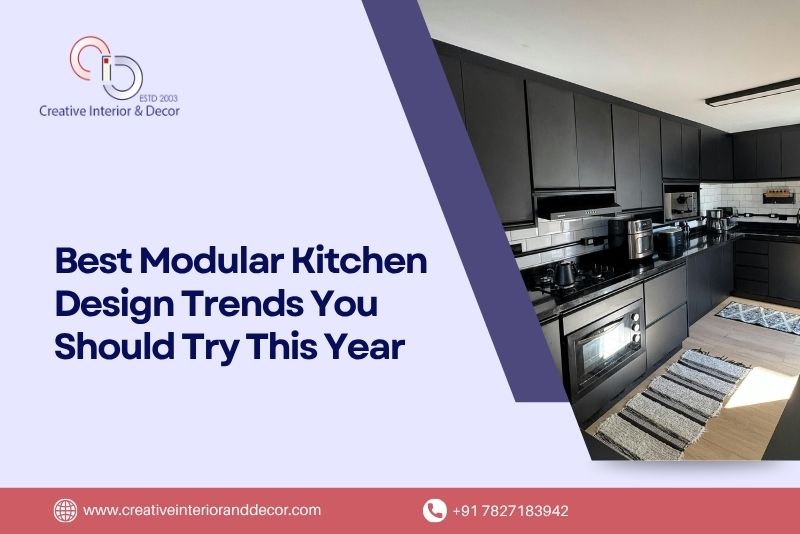
The kitchen is no longer just where meals are made. In today’s Indian homes, it has become a living space, a place for conversation, creativity, and daily ritual. And at the heart of this transformation is modular kitchen design.
A decade ago, the average Indian kitchen was defined by heavy masonry platforms, mismatched cabinets, and a reluctance to change. Today, sleek modular units, smart storage solutions, and contemporary finishes are rewriting what a kitchen can look and feel like, in compact apartments, sprawling villas, and everything in between.
Whether you are renovating an older kitchen or planning one from scratch, working with a residential interior designer and understanding the latest modular kitchen design trends will help you make smarter, more stylish choices. This guide covers the most popular layouts, trending features, and practical tips tailored for modern Indian households.
What Is Modular Kitchen Design?
A modular kitchen is built from standardised, pre-fabricated cabinet modules including base units, wall units, tall units, and accessories that are assembled on-site to fit a specific space. Unlike traditional built-in kitchens, every module is designed to work independently and in combination, giving homeowners enormous flexibility in layout, finish, and configuration.
The appeal is immediate. You can choose your cabinet depth, countertop material, shutter finish, and hardware independently. You can reconfigure sections if you move. And because modules are manufactured under controlled factory conditions, the finish quality and durability are significantly better than on-site carpentry.
Why modular kitchens are thriving in India:
- Rising apartment living and smaller kitchen footprints have made efficiency a priority.
- A growing preference for low-maintenance, durable interiors suits modular construction well.
- Global design aesthetics are now widely accessible through Indian brands and manufacturers.
- An expanding range of affordable materials makes modular kitchens viable across budgets.
- Factory-finished modules deliver consistent quality that on-site work rarely matches.
Top Modular Kitchen Trends This Year
Modular kitchen design in India is evolving rapidly. Here are the most relevant trends shaping kitchens right now:
1. Warm Natural Materials
Wood-textured laminates, stone-finish countertops, and ceramic backsplashes are replacing the cold, clinical look of earlier modular kitchens. Warm materials make the kitchen feel inviting and connected to the rest of the home. Popular choices include walnut-effect HPL shutters, Kota stone-inspired quartz countertops, and hand-laid subway tiles with soft grout.
2. Matte Finishes
Matte shutters in earthy tones such as olive, warm grey, dusty rose, and charcoal are replacing high-gloss acrylic as the preferred cabinet finish. Matte surfaces are easier on the eye in daily use, hide fingerprints far better than gloss, and age gracefully without looking worn. They also pair beautifully with brass or matte black hardware.
3. Handleless Cabinets
J-pull or integrated groove profiles give kitchens a seamless, minimal appearance while remaining highly functional and easy to clean. Handleless designs eliminate a common grease-collection point in Indian kitchens and create a sleek, continuous cabinet face that reads as modern and well-considered.
4. Under-Cabinet Lighting
LED strips beneath wall cabinets improve task lighting directly at the countertop and add a warm ambient glow that makes the kitchen feel intentional and designed. This is one of the highest-impact and lowest-cost upgrades available in modular kitchen design. Warm white at 3000K works best for Indian kitchens where food colour accuracy matters during cooking.
5. Smart Storage Solutions
Magic corners, tall pantry units, pull-out tandem drawers, and spice pull-outs are transforming storage from an afterthought into a feature. The best modular kitchens are designed with storage as a starting point, not an end-of-process decision. Key smart storage items worth prioritising include:
- Magic corner units that retrieve items from deep cabinet corners using a swing-out mechanism
- Tandem box drawers in base cabinets for easy access to heavy vessels and pots
- Pull-out spice racks integrated beside the hob for direct reach during cooking
- Tall pantry columns with interior pull-out shelves for organised dry goods storage
- Integrated waste bins with segregated compartments for kitchen waste management
6. Sustainable Materials
BWP-grade (boiling waterproof) plywood, low-VOC finishes, and recycled quartz countertops are gaining traction among eco-conscious homeowners. Sustainable choices are not a compromise in quality. BWP-grade carcasses outperform particle board in moisture resistance and longevity, making them both the responsible and practical choice for Indian kitchens.
7. Built-In Appliances
Integrated ovens, microwaves, and dishwashers flush-mounted into cabinetry create a clean, uncluttered look. Built-in appliances free counter space, reduce visual noise, and give the kitchen a genuinely high-end appearance. Plan appliance locations during the initial design phase, as afterthought integration rarely achieves the same seamless result.
8. Soft-Close Hardware
Soft-close hinges and drawer runners are now considered non-negotiable in quality modular kitchens. They extend cabinet life significantly by eliminating the impact stress of slamming, and they bring a premium, quiet feel to daily kitchen use. Never compromise on hardware quality, as it is the component you interact with most.
L-Shape Modular Kitchen Design
The L-shape kitchen uses two adjacent walls, forming an L configuration. One wall handles cooking and the hob; the other accommodates storage, the sink, and prep space. It is the single most widely used layout in Indian apartments because it is efficient, natural to cook in, and makes excellent use of corner space.
Structure and Functionality
The L-shape creates a natural work triangle between the hob, sink, and refrigerator, reducing the steps you take during cooking. The corner junction can be fitted with a magic corner unit or a lazy Susan carousel to make use of every cubic centimetre of otherwise wasted space.
Ideal For
Kitchens between 80 and 150 square feet. Works particularly well in open-plan homes where one leg of the L can face a dining or living area, giving the kitchen a semi-open, social character.
Advantages
- Efficient work triangle for smooth cooking workflow
- Allows a breakfast counter or dining overhang on the open end
- Easily adapted for open kitchens and semi-open layouts
- Good natural light access from two wall directions
Limitations
- Corner cabinets can be awkward to access without the right fittings
- Less continuous counter space compared to a U-shape layout
- Not ideal for two-cook households who need separate work zones
Design Suggestions
- Materials: Use a two-tone approach with matte shutters on base cabinets and a wood-texture laminate on wall cabinets for visual warmth without complexity.
- Storage: Install a tall pantry unit at the end of the longer leg to maximise vertical storage without cluttering the worktop.
- Lighting: Use under-cabinet LED strips along both arms and a pendant light over any breakfast counter for layered illumination.
U-Shape Modular Kitchen Design
The U-shape kitchen wraps around three walls, creating an enclosed cooking zone with an abundance of counter space and storage on all three sides. It is the preferred layout for families who cook seriously, as it provides multiple burners, a large prep area, and generous storage for vessels, appliances, and pantry goods.
Structure and Functionality
With counters on three sides, you can dedicate each arm to a specific function: one for cooking, one for washing and prep, one for storage and appliances. Everything is within easy reach. Built-in appliances including oven, microwave, and dishwasher integrate naturally into the cabinetry without occupying counter space.
Ideal For
Kitchens of 120 square feet and above with a dedicated kitchen room rather than an open-plan arrangement. Best suited for homes where the kitchen is a serious cooking space rather than a visual backdrop.
Advantages
- Maximum counter and storage space of any standard kitchen layout
- Ideal for multiple cooks working simultaneously without collision
- Efficient workflow with cooking, washing, and storage all within easy reach
- Excellent scope for built-in appliances that integrate cleanly into the design
Limitations
- Requires a larger kitchen footprint and is not suitable for compact spaces
- Can feel enclosed in smaller rooms with limited ventilation or windows
- Two corner junctions must be managed thoughtfully with the right fittings
Design Suggestions
- Materials: Quartz countertops work well for heavy-use U-shape kitchens as they are durable, non-porous, and visually seamless across three continuous surfaces.
- Storage: Use tall pull-out pantry units at the ends of the U. Install soft-close tandem drawers in base cabinets instead of traditional shutters for better access to heavy vessels.
- Lighting: Combine under-cabinet strips with a central ceiling fixture. A window above the sink on the back wall is a major advantage and should be prioritised if the layout allows.
Parallel Modular Kitchen Design
Also called a galley kitchen, the parallel layout places two rows of cabinets on facing walls with a central aisle between them. It is a layout borrowed from professional kitchens for good reason. The parallel design is intensely efficient, with a natural flow between the two counters and no wasted movement.
Structure and Functionality
Typically one wall handles the cooking zone with the hob and oven, while the other manages washing, prep, and storage. The aisle width is critical. Aim for at least 900mm, and ideally 1,050mm, to allow two people to work comfortably without collision. One end of the kitchen is usually open while the other meets a wall.
Ideal For
Long, narrow kitchens that are common in older apartments and builder-floor homes. Also an excellent choice for homes where the kitchen is enclosed and accessed from one end only.
Advantages
- Very efficient workflow for a single cook with everything in direct reach
- Maximises storage in narrow spaces by using both walls fully
- Easy to designate dedicated zones on each wall for cooking, washing, and storage
- Budget-friendly to fit out as there are no complex corner configurations
Limitations
- Can feel cramped when two people are working at the same time
- No natural corner storage opportunity unlike L-shape or U-shape layouts
- Aisle lighting needs careful planning to avoid dark working conditions
Design Suggestions
- Materials: Use reflective finishes such as light matte, pale wood, or soft white on at least one wall to keep the space from feeling tunnel-like.
- Storage: Floor-to-ceiling tall units at one end can house a full pantry, built-in oven, and microwave, freeing both counters for active work.
- Lighting: Under-cabinet strips on both sides are essential. A skylight or borrowed light from an adjacent room makes a transformative difference in a parallel kitchen.
Colour Palettes, Countertops, and Backsplashes
The visual identity of a modular kitchen design rests heavily on three surface choices: cabinets, countertop, and backsplash. Getting these right means understanding how they interact in both daylight and artificial light.
Popular colour directions for 2025:
- Warm neutrals including linen, sand, and warm white for a timeless, approachable kitchen
- Earthy greens such as sage, olive, and forest green for a modern organic feel
- Moody darks including charcoal, slate blue, and deep teal for a dramatic, contemporary look
- Two-tone combinations pairing a dark lower cabinet with a lighter wall cabinet for visual depth
Countertops:
Quartz is the dominant choice. It is engineered for durability, available in stone-look finishes, and very easy to maintain. Compact laminate is a budget-smart alternative. Natural granite remains popular in larger kitchens where the visual scale of the material justifies the investment.
Backsplashes:
Large-format tiles, fluted ceramic panels, and subway tiles with coloured grout are trending strongly. A full-height backsplash from countertop to the underside of wall cabinets gives kitchens a more finished, considered appearance compared to the narrow strip approach common in older modular kitchen designs.
Addressing Common Indian Kitchen Challenges
Indian cooking is intense with high heat, heavy vessels, pungent spices, and daily deep frying. Any thoughtful modular kitchen design must address these realities directly:
- Ventilation: A powerful chimney with a minimum of 1,200 cubic metres per hour suction is non-negotiable for Indian cooking. Position it directly above the hob, not offset to the side. Plan the exhaust duct route before finalising the kitchen layout as it affects which wall configurations are possible.
- Storage for vessels: Deep base drawers with customisable dividers handle heavy Indian cookware far better than traditional shuttered base cabinets. Plan for a dedicated vessel drawer in your modular kitchen layout from the start.
- Limited space: Prioritise vertical storage. Tall units reaching the ceiling avoid the dead space above cabinet problem that accumulates dust and grime. A lofted cabinet above the refrigerator is a simple and effective win in small kitchens.
- Maintenance: Choose finishes that are resistant to heat, grease, and moisture. Membrane and acrylic shutters are high-maintenance in Indian kitchens. PU (polyurethane) and high-pressure laminate (HPL) finishes hold up significantly better in daily Indian cooking conditions.
- Open shelving: Open shelves look beautiful in magazine kitchens but collect grease and dust rapidly in Indian cooking environments. If you want open shelves, limit them to one shelf for display and keep the rest closed.
Practical Tips: Do’s and Don’ts for Planning Your Modular Kitchen
Do This
- Measure your kitchen twice before placing any orders as cabinet dimensions are unforgiving and errors are expensive to correct.
- Plan all electrical points, plumbing outlets, and gas connections before modules are installed.
- Choose BWP or MR-grade plywood for carcasses rather than particle board for better moisture resistance.
- Invest in soft-close hardware throughout the kitchen as it pays back significantly in durability and daily feel.
- Include a dedicated waste management unit with pull-out segregated bins in your design from the start.
- Consider future appliance needs and leave rough-in space for a dishwasher even if you do not buy one immediately.
- Ask your kitchen designer or supplier for a 3D layout rendering before approving the final design.
Avoid This
- Do not skip ventilation planning. Chimney placement and ducting are not afterthoughts in Indian kitchen design.
- Do not use a single central light fixture as your only kitchen lighting. It creates shadows exactly where you need to see while working.
- Do not choose high-gloss acrylic shutters near the hob as they scratch and stain with heat exposure over time.
- Do not allow the aisle width to fall below 900mm as it creates a frustrating daily workspace.
- Do not over-design with too many materials, colours, and textures as this creates visual noise rather than beauty.
- Do not ignore landing zones next to the hob and refrigerator as both need adjacent counter space for safe and efficient cooking.
The Value of Expert Kitchen Planning
Modular kitchens are deceptively complex. What looks like a straightforward selection of cabinets and countertops involves dozens of decisions that are structural, functional, ergonomic, and aesthetic, and these decisions interact in ways that only become apparent during daily use.
A skilled kitchen planner does not just arrange boxes on a floor plan. They anticipate workflow, manage material compatibility, coordinate appliance integration, and ensure the final design fits both the space and the people using it. They also navigate the inevitable constraints of Indian construction including irregular walls, uneven floors, and awkward column positions, and resolve them invisibly within the design.
Whether you work with an independent interior designer or a specialised modular kitchen brand, involving an experienced professional early in the process before your heart is set on a specific layout or finish will produce a significantly better result than making sequential decisions alone.
Conclusion
The best modular kitchen design is not defined by the trendiest finish or the most elaborate storage system. It is defined by how well it fits the people using it, their cooking style, their daily rhythm, their household size, and the physical realities of their home. This is where the expertise of Creative Interior & Decor comes in, helping transform ideas into kitchens that are both practical and visually compelling.
Whether you are drawn to the efficient simplicity of a parallel layout, the generous capacity of a U-shape, or the versatile openness of an L-shape, the right modular kitchen design will make cooking feel less like a chore and more like a pleasure. Start with your needs, layer in your aesthetic preferences, and let smart planning do the rest.
Your kitchen deserves to be both beautiful and brilliantly functional. With the right modular kitchen design, there is absolutely no reason it cannot be both. Visit us at our local business location.