
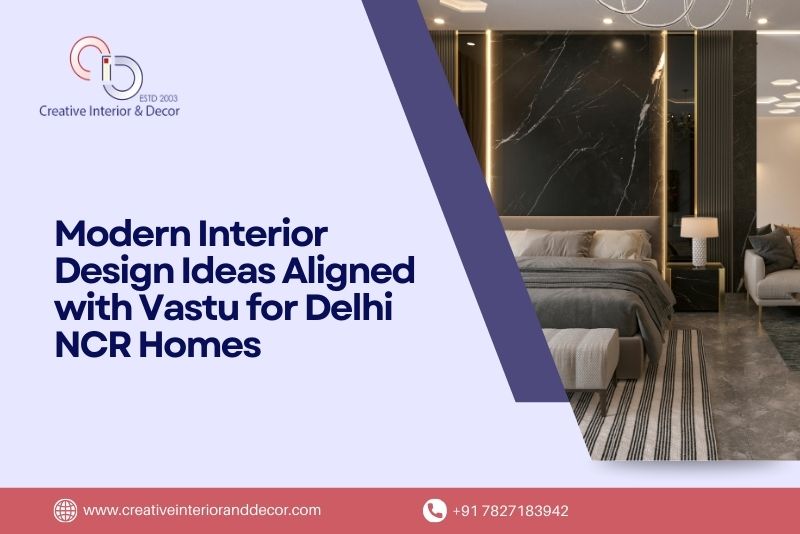
Modern interior design and Vastu Shastra need not be at odds. For homeowners in Delhi NCR, where apartments, high-rises, and compact urban villas are the norm, working with a thoughtful interior designer in Delhi NCR or applying professional design principles can help blend contemporary aesthetics with basic Vastu guidelines to create spaces that feel balanced, calm, and practical.
This guide explains how to combine modern design such as minimalism, smart storage, sustainable materials, and contemporary finishes with straightforward Vastu-aligned choices you can actually apply in Delhi homes.
What is Modern Interior Design and why Vastu still matters in Indian homes
Modern interior design emphasizes clean lines, functional layouts, neutral palettes, open spaces, and materials that are sustainable and low-maintenance. In residential interior designing, it values light, uncluttered interiors and solutions that work for daily life, such as built-in storage, flexible furniture, and smart lighting.
Vastu Shastra is a traditional system of architecture and spatial arrangement focused on orientation, movement of light and air, and placement of rooms and elements. In contemporary homes, many people use Vastu as a practical framework, not a religious requirement, to shape layouts that feel comfortable and orderly. In Delhi NCR specifically, where apartments often have fixed layouts from builders, applying Vastu in a modern, flexible way helps balance energy flows while staying realistic about constraints.
Why combine modern aesthetics with Vastu principles
- Comfort and function: Modern design optimizes how a space is used, while Vastu adds directional logic that makes circulation and room placement feel intuitive.
- Psychological balance: Clean lines, natural light, and decluttered spaces reduce stress. Vastu’s emphasis on orientation and light complements this approach.
- Practical well-being: In dense cities like Delhi, attention to ventilation, daylight, and natural materials improves indoor air quality and thermal comfort, which are goals shared by both systems.
Vastu should be treated as a set of design-friendly guidelines rather than rigid rules. Use them where they make sense, and always prioritize safety, building regulations, and liveability.
Room-by-room Vastu-aligned modern design guidance
Living Room
The living room is the social heart of the home. Its orientation influences daylight, airflow, and furniture circulation.
Vastu-aligned guidance
- East or North-facing living rooms receive pleasant daylight. If the living room faces South or West, which is common in Delhi apartments, focus on heat and glare control.
- The main entrance should ideally open into a clean, uncluttered space. North or East-facing entrances are traditionally preferred, but existing layouts can be improved with thoughtful planning.
- Place primary seating against the South or West wall so occupants face North or East.
- Avoid placing heavy electronics in the Northeast. If unavoidable, keep the unit light and visually open.
Modern design integration
- Use neutral palettes such as beige, warm grey, and soft taupe with textured fabrics.
- Keep circulation paths open and avoid overcrowding the center of the room.
- Layer lighting using recessed lights, contemporary fixtures, and accent lamps.
- Combine sustainable wood finishes with matte laminates for a clean modern look.
Do’s and Don’ts
- Do keep the entry zone open and organized.
- Do not block walkways with oversized furniture.
Bedroom Design
Bedrooms influence rest and recovery, making layout and orientation especially important.
Vastu-aligned guidance
- The master bedroom is best placed in the South-West zone. West or South is acceptable if South-West is not available.
- Position the bed with the headboard against the South or West wall.
- Allow natural light from East-facing windows while controlling glare with curtains.
- Avoid mirrors that directly reflect the bed.
Modern design integration
- Use soft colors like muted greens, warm neutrals, or pastels.
- Install floor-to-ceiling wardrobes to minimize visual clutter.
- Choose breathable fabrics, upholstered headboards, and acoustic rugs to enhance comfort.
Do’s and Don’ts
- Do keep heavier furniture in the South-West.
- Do not place the bed directly under beams without visual correction through ceiling design.
Kitchen Design
The kitchen is a high-energy zone that requires careful planning of heat, water, and ventilation.
Vastu-aligned guidance
- The South-East zone is ideal for kitchens. North-West is an alternative.
- The person cooking should ideally face East.
- Place sinks and water elements in the North or North-East direction.
- Strong exhaust and chimney systems are essential in Delhi homes.
Modern design integration
- Modular kitchens with clean lines and handleless cabinets enhance usability.
- Choose quartz or engineered stone countertops for durability.
- Incorporate smart storage solutions like pull-out pantries and corner units.
Do’s and Don’ts
- Do ensure proper ventilation.
- Do not place the cooktop directly under structural beams if avoidable.
Bathroom and Toilet Design
Bathrooms should be hygienic, well-ventilated, and discreet.
Vastu-aligned guidance
- North-West or West locations are generally preferred.
- Avoid placing toilets in the North-East where possible.
- Separate wet and dry areas for hygiene and longevity.
Modern design integration
- Use wall-mounted fixtures, concealed cisterns, and large-format tiles.
- Install mechanical exhaust fans with proper external venting.
- Select moisture-resistant, non-slip materials.
Do’s and Don’ts
- Do keep bathrooms bright and ventilated.
- Do not use materials that trap moisture and odors.
Home Office or Study
With remote work becoming common in Delhi NCR, home offices need careful planning.
Vastu-aligned guidance
- North-East or East is ideal for study areas.
- Sit facing North or East with solid wall support behind the chair.
- Avoid sitting directly in line with doors or cluttered passages.
Modern design integration
- Use ergonomic furniture with cable management.
- Control noise using rugs, curtains, and acoustic panels.
- Create flexible setups with foldable desks for compact homes.
Do’s and Don’ts
- Do prioritize daylight and task lighting.
- Do not sit facing harsh backlight from windows.
Balcony and Outdoor Areas
Balconies provide light, air, and a connection to the outdoors, which is especially valuable in Delhi apartments.
Vastu-aligned guidance
- East or North-facing balconies are preferred.
- Seating and plants should not obstruct airflow.
- Avoid excessive clutter.
Modern design integration
- Use vertical gardens and compact furniture.
- Choose weather-resistant flooring and lightweight decor.
- Install shading solutions to manage heat.
Do’s and Don’ts
- Do maintain drainage and plant trays.
- Do not overload balconies with heavy storage.
Common Delhi NCR home challenges and solutions
Small apartments
- Use vertical storage and built-in furniture.
- Define zones using lighting and rugs instead of partitions.
West or South-facing homes
- Install light-filtering curtains and reflective window films.
- Add shading plants and thermal materials.
Limited natural light
- Use light-colored finishes and mirrors strategically.
- Layer artificial lighting across the home.
Noise and air quality
- Use sealed windows and heavy curtains.
- Incorporate indoor plants and air purifiers.
Quick Vastu-friendly modern design checklist
Do
- Choose neutral palettes and natural materials.
- Prioritize ventilation and storage.
- Place heavy furniture along South and West walls.
- Keep entrances clear and welcoming.
Do Not
- Block daylight unnecessarily.
- Force strict Vastu rules that reduce usability.
- Ignore building regulations or safety considerations.
When professional guidance helps
If adapting a builder layout feels overwhelming, consulting a Vastu-aware interior designer can help translate principles into workable solutions and practical interior design ideas that suit your home.
Layout planning, furniture placement, lighting balance, and material selection often benefit from professional insight, especially in compact or irregular spaces.
FAQs
1. Can modern interior design really follow Vastu principles?
Yes, modern interior design can align well with Vastu when applied thoughtfully. Vastu focuses on orientation, light, airflow, and balance, while modern design emphasizes function, simplicity, and comfort. When combined, they create homes that are practical, visually calm, and comfortable without requiring drastic layout changes or rigid rules.
2. Is Vastu necessary for apartments in Delhi NCR?
Vastu is not mandatory, but many homeowners in Delhi NCR choose to follow basic Vastu guidelines to improve comfort and space planning. Since most apartments have fixed builder layouts, Vastu is usually applied through furniture placement, lighting, color selection, and storage planning rather than structural changes.
3. What if my flat does not have an ideal Vastu direction?
This is very common in high-rise apartments. In such cases, focus on what can be controlled, such as bed placement, kitchen workflow, ventilation, decluttering, and lighting. Modern interior design solutions allow flexibility, helping you achieve balance without rebuilding or compromising daily usability.
4. How can I apply Vastu in a small or compact home?
In smaller homes, Vastu works best when paired with minimalism and smart storage. Keep spaces clutter-free, allow maximum light and airflow, and use built-in furniture. Avoid overcrowding rooms and place heavier furniture along South or West walls where possible to create visual stability.
5. Are certain colors more Vastu-friendly for modern homes?
Vastu generally favors calm, balanced colors rather than extremes. Neutral shades, soft pastels, muted greens, and warm earth tones work well in modern interiors. Bright or dark colors can still be used as accents, but they should not dominate living or sleeping spaces.
6. Do I need a Vastu consultant or an interior designer?
Not necessarily. Many homeowners achieve good results by working with an interior designer who understands both modern residential interior designing and practical Vastu principles. This approach ensures the home remains functional, compliant with building norms, and visually cohesive while respecting basic Vastu logic.
7. Can Vastu be followed without making the home look traditional?
Absolutely. Vastu does not dictate decor style. It focuses on direction, flow, and balance, not ornamentation. With modern furniture, clean finishes, and contemporary materials, you can follow Vastu principles while maintaining a fully modern and elegant interior.
Conclusion
Modern interior design and Vastu can work together seamlessly in Delhi NCR homes when approached with flexibility and common sense, an approach often emphasized by design studios such as Creative Interior & Decor.
Focus on comfort, ventilation, decluttering, and thoughtful layout decisions. Use Vastu principles as guiding tools rather than rigid rules, and allow modern design solutions to support daily living.
The result is a home that feels contemporary, balanced, and well-suited to urban life in Delhi. Thoughtful design, not perfection, is what creates spaces that truly support well-being.