
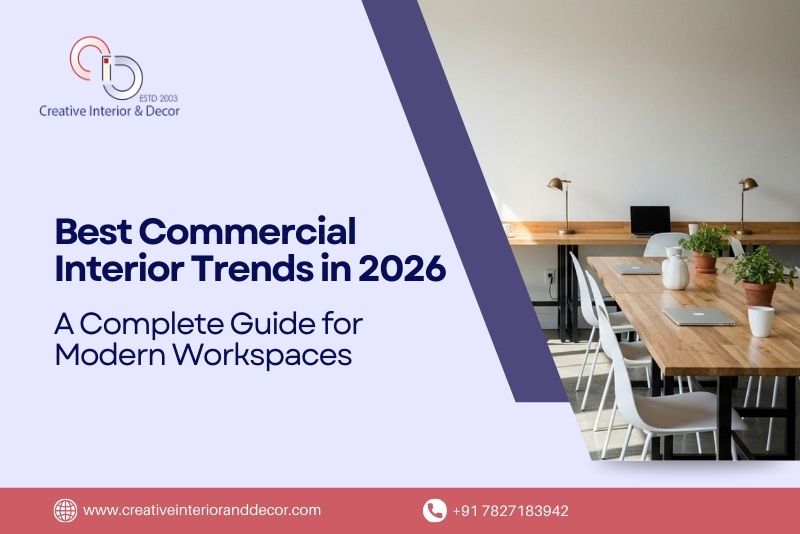
Commercial interior design is evolving faster than ever. As businesses adapt to hybrid work models, sustainability goals, employee well-being, and rapid technological change, the way commercial spaces are designed in 2026 looks very different from just a few years ago. Offices, retail spaces, co-working hubs, and hospitality environments are no longer just functional. They are strategic tools that influence productivity, brand perception, and user experience.
This guide explores the best commercial interior trends in 2026, backed by industry insights, workplace studies, and global design movements. Whether you are a business owner, architect, or interior designer in Noida working with commercial projects, understanding these trends will help create spaces that are future-ready, adaptable, and human-centric.
1. Human-Centric Design Takes Center Stage
In 2026, commercial interiors are being designed around people, not just processes. Human-centric design focuses on comfort, mental well-being, and emotional connection within a workspace.
Key elements include:
- Ergonomic furniture designed for long working hours
- Access to natural light and outdoor views
- Acoustic comfort to reduce noise stress
- Layouts that support collaboration and focused work
Research from workplace psychology studies consistently shows that well-designed environments improve productivity and employee retention. This is why every experienced interior designer in Noida working on commercial projects now prioritizes user comfort during the planning stage.
2. Sustainable and Eco-Conscious Interiors Become the Standard
Sustainability is no longer a trend. It is an expectation. In 2026, commercial interior design heavily emphasizes environmentally responsible choices.
Major sustainability trends include:
- Use of recycled and locally sourced materials
- Low-VOC paints, adhesives, and finishes
- Energy-efficient lighting and HVAC integration
- Modular furniture that reduces long-term waste
Green-certified commercial spaces are also seen as more trustworthy and forward-thinking by clients and employees. For an interior designer in Noida, sustainability aligns well with growing demand from corporate offices, IT parks, and retail brands aiming to reduce their environmental footprint.
3. Flexible and Adaptive Layouts for Hybrid Work
The rise of hybrid work has completely reshaped office interior planning. Fixed layouts are being replaced with adaptable spaces that can evolve with business needs.
Popular flexible design solutions in 2026 include:
- Moveable partitions and folding walls
- Multi-purpose meeting and collaboration zones
- Hot-desking and shared workstations
- Convertible conference rooms
These layouts allow businesses to scale up or down without major renovations. Commercial clients increasingly consult an interior designer in Noida who understands spatial flexibility and long-term usability rather than rigid design concepts.
4. Smart Technology Integration in Commercial Spaces
Technology is deeply embedded into commercial interiors in 2026, creating smarter and more efficient environments.
Common smart design features include:
- Automated lighting and climate control systems
- Touchless entry systems and smart security
- Integrated charging stations and IoT-enabled furniture
- Digital wayfinding and interactive screens
Smart interiors not only improve energy efficiency but also enhance daily user experience. Interior planning now requires collaboration between designers, IT consultants, and facility managers, especially in large commercial projects across Noida’s corporate hubs.
5. Biophilic Design for Health and Productivity
Biophilic design continues to dominate commercial interiors in 2026, driven by growing awareness of mental health and workplace wellness.
Biophilic elements include:
- Indoor plants and green walls
- Natural materials like wood and stone
- Water features and organic textures
- Color palettes inspired by nature
Studies indicate that biophilic spaces reduce stress and increase focus. For businesses working with an interior designer in Noida, biophilic design is especially effective in dense urban settings where access to nature is limited.
6. Bold Yet Purposeful Color Palettes
Neutral-only interiors are being replaced with thoughtful color strategies. In 2026, commercial spaces use color to influence mood, productivity, and brand identity.
Trending color approaches include:
- Earthy tones paired with bold accent colors
- Warm neutrals instead of cool greys
- Color zoning to define different work areas
- Brand-aligned palettes without visual overload
An experienced interior designer in Noida understands how to balance visual appeal with functionality, ensuring that color enhances focus rather than distracting users.
7. Minimalist Design with Functional Depth
Minimalism remains popular in 2026, but it has evolved. Instead of empty-looking spaces, the focus is on intentional minimalism where every element has a purpose.
Features of modern minimalist commercial interiors include:
- Clean lines and uncluttered layouts
- Hidden storage solutions
- High-quality materials over excessive décor
- Emphasis on negative space
This approach improves maintenance efficiency and creates visually calming environments, especially in offices, clinics, and professional service spaces.
8. Experience-Driven Retail and Commercial Spaces
Commercial interiors in retail, hospitality, and showrooms are shifting from transactional layouts to experience-driven environments.
Experience-focused design includes:
- Immersive brand storytelling through interiors
- Interactive zones for customer engagement
- Lounge-style layouts instead of rigid counters
- Visually engaging yet functional design elements
In competitive markets like Noida, businesses increasingly rely on an interior designer in Noida who understands how spatial design influences customer behavior and dwell time.
9. Acoustic Design as a Priority
With open-plan layouts still widely used, acoustic comfort has become critical in 2026.
Acoustic solutions include:
- Sound-absorbing ceiling panels
- Acoustic wall treatments
- Carpet tiles and soft furnishings
- Zoned layouts to separate noisy areas
Proper acoustic planning improves concentration and reduces fatigue, making it an essential aspect of commercial interior design.
10. Local Context and Cultural Sensitivity in Design
Global design trends are now being adapted to local contexts. In 2026, commercial interiors reflect regional culture, climate, and work habits rather than directly copying international styles.
For an interior designer in Noida, this means:
- Designing for local climate conditions
- Incorporating subtle regional materials or textures
- Understanding business culture and work patterns
- Creating spaces that feel relevant and authentic
This localized approach strengthens user connection and long-term usability.
Frequently Asked Questions
- What are the top commercial interior design trends in 2026?
The top commercial interior trends in 2026 include human-centric design, sustainable materials, flexible layouts for hybrid work, smart technology integration, biophilic design, improved acoustic planning, and experience-driven spaces. These trends focus on productivity, well-being, and long-term usability.
- Why is human-centric design important in commercial interiors?
Human-centric design prioritizes comfort, mental well-being, and usability. In commercial spaces, this leads to better employee productivity, reduced stress, and higher retention. Many commercial projects planned by an interior designer in Noida now focus on ergonomics, natural light, and acoustic comfort.
- How does sustainability influence commercial interior design in 2026?
Sustainability plays a major role in commercial interior design in 2026 through the use of eco-friendly materials, energy-efficient lighting, low-VOC finishes, and modular furniture. Sustainable interiors also help businesses meet environmental goals and reduce long-term operational costs.
- What role does technology play in modern commercial interiors?
Technology enhances efficiency and user experience in modern commercial interiors. Automated lighting, climate control systems, touchless access, and smart workstations are commonly integrated. An interior designer in Noida often collaborates with technology teams to ensure seamless integration.
- How are commercial interiors adapting to hybrid work models?
Commercial interiors are adapting to hybrid work by using flexible layouts, movable partitions, hot-desking solutions, and multi-functional collaboration areas. These designs allow spaces to change based on team size and work requirements without frequent renovations.
- What is biophilic design, and why is it popular in 2026?
Biophilic design incorporates natural elements such as plants, natural materials, and nature-inspired colors into interiors. It is popular in 2026 because studies show it reduces stress, improves focus, and enhances overall well-being in commercial environments.
- Why is localexpertiseimportant in commercial interior design projects?
Local expertise ensures that commercial interiors align with regional climate, work culture, and regulations. Working with an interior designer in Noida helps businesses create spaces that are practical, culturally relevant, and suited to local operational needs.
Final Thoughts
The best commercial interior trends in 2026 focus on people, purpose, and performance. From sustainable materials and smart technology to biophilic elements and flexible layouts, commercial spaces are becoming healthier, smarter, and more adaptive.
For businesses planning future-ready environments, working with an interior designer in Noida who understands these evolving trends ensures that spaces are visually appealing, functional, and aligned with modern work culture.
Read also:- Local Interior Design Trends in Delhi & NCR: A Deep Dive into Regional Style Evolution